Hotel Bedding
How Often Should Hotels Replace Bedding and Towels?
What you'll learn
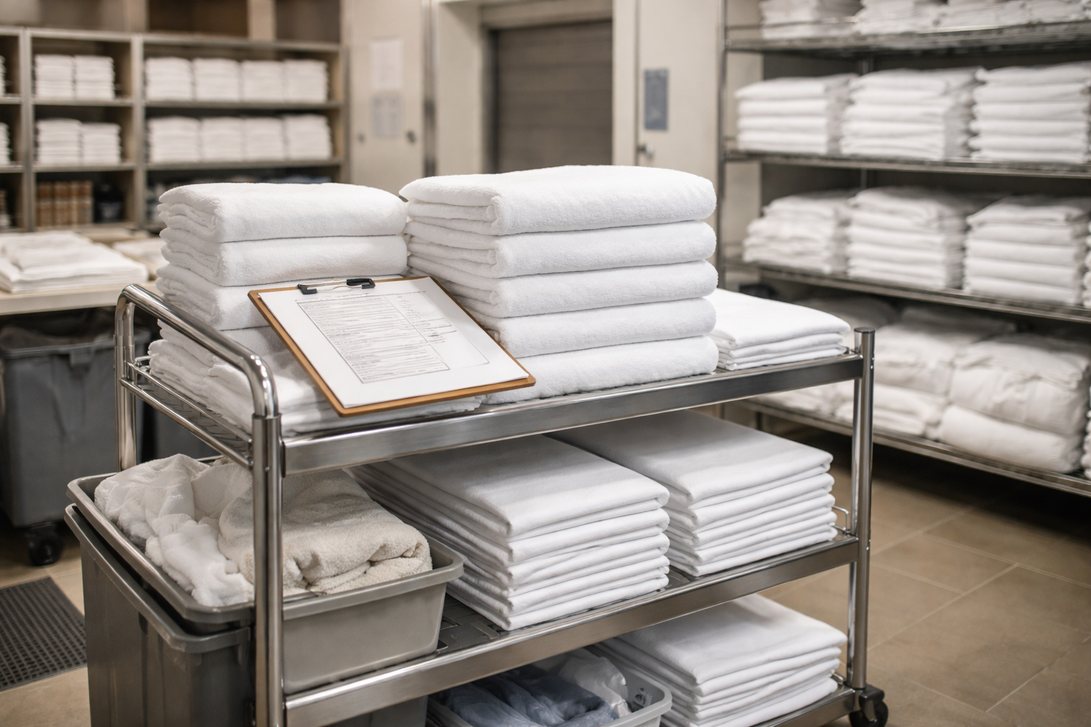
How Often Should Hotels Replace Bedding and Towels?
There isn’t a single replacement timeline that fits every property. In practice, hotels get better results by setting replacement triggers tied to guest-facing appearance, laundry-cycle stress, and operational realities like par levels and room type.
Quick Answer
Replace bedding and towels when they no longer meet guest expectations for appearance and hand-feel or when they compromise operations—for example, recurring stains that won’t release, thinning fabric, frayed hems, loss of absorbency/softness, or excessive rewash time. Build your plan around (1) inspection standards, (2) laundry cycle counts, (3) room category, and (4) maintaining enough par to rotate inventory without over-washing.
What Really Drives Replacement Frequency (and Why It Varies)
1) Guest-facing condition (the most practical trigger)
For operators, replacement decisions are usually made in the room—not on a calendar. If guests can see or feel the problem, it’s already impacting perception.
- Stains that won’t lift (yellowing/greying, cosmetics, rust, set-in soil)
- Fabric thinning or shine (especially on sheets in high-turn rooms)
- Fraying seams, holes, or edge wear (towels and pillowcases often show it first)
- Texture changes (scratchy towels, “flat” terry loops, sheets that feel rough)
- Absorbency loss in towels/washcloths (often felt before it’s visibly obvious)
2) Laundry practices and equipment efficiency
Linens are consumables—every wash is mechanical and chemical stress. Equipment selection and wash formula can influence how quickly items wear out and how much rewash you need.
ENERGY STAR notes that certified commercial clothes washers are on average 9% more energy efficient and use about 45% less water than standard models, while providing strong laundry performance—an operational lever that can support more consistent results and reduce unnecessary rewash that accelerates linen wear. Source: ENERGY STAR Commercial Clothes Washers.
3) Par levels and turnover pressure
When par is too tight, teams are forced into faster turns, more aggressive drying, and less time to pull “borderline” pieces—often shortening linen life. When par is healthy, you can rotate stock, quarantine stained items for treatment, and retire pieces before they reach guest rooms.
4) Room type and service level
Suites, premium rooms, and extended-stay units may experience different wear patterns (longer stays, different laundering cadence, more in-room use). Set different inspection thresholds by room category if guest expectations differ.
A Practical Replacement Framework You Can Implement
Step 1: Define “keep / downgrade / retire” standards
Use simple, visual standards your housekeeping team can follow:
- Keep: bright/white (or consistent color), no thin spots, no frays, soft hand-feel.
- Downgrade: minor shadowing or cosmetic flaws not suitable for guestrooms—repurpose for back-of-house where appropriate.
- Retire: persistent stains, thinning, holes, edge failure, or loss of absorbency.
Step 2: Track cycle counts (even approximately)
If you don’t have RFID tracking, you can still estimate cycles by:
- Recording pounds processed by linen type weekly
- Estimating pieces per pound for your SKUs
- Dividing by on-hand par to estimate turns per piece
This is usually “good enough” to spot which items are wearing out faster and whether a specific wash formula or drying practice is driving premature failure.
Step 3: Buy and stock by category (so you can swap without disruption)
Operators replace more efficiently when SKUs are organized by function and use case. Hotels4Humanity organizes purchasing around core categories used in daily operations, including sheets, pillowcases, blankets, and more under Hotel Bedding and terry items under Hotel Towels. Having consistent categories and specs makes it easier to “top off” depleted items without introducing mismatched feel or appearance across floors.
Replace vs. Keep: A Field Checklist for Housekeeping and Laundry
| Item | Keep in Guestroom If… | Flag for Replacement If… | Operational Note |
|---|---|---|---|
| Bath towels | Soft, consistent color, loops intact, absorbency intact | Scratchy hand-feel, thinning, frayed hems, persistent stains, absorbency loss | Absorbency/feel often drive guest complaints before visible damage |
| Hand towels / washcloths | Even appearance, no set-in cosmetics/soil | Greying, makeup stains that won’t release, edge fray | These show staining earliest; set stricter visual standards |
| Bed sheets | Opaque, smooth, no pilling, crisp appearance after finishing | Sheer/thinning areas, tearing, seam failures, roughness, discoloration | Track by sheet type and weave; high-turn rooms wear faster |
| Pillowcases | Bright, no facial oil shadowing, intact closure/hem | Yellowing/greying, frayed openings, thin corners | Pillowcases can be your earliest “replacement signal” for the whole set |
Planning Replacement Purchases Without Overbuying
Use “visual readiness” as the governing KPI
Instead of replacing everything at once, plan steady-state replenishment so each week/month you remove a predictable number of pieces that fail inspection. This reduces the risk of sudden, large replacements after a busy season.
Standardize what you can (and separate what you must)
- Standardize core guestroom towels and core sheet sets to simplify replenishment and reduce mismatches.
- Separate premium-room terry or bedding so it isn’t diluted into standard rooms during rush turns.
Keep the spec hierarchy clear in purchasing
When you need to re-order, it helps to buy by the exact subcategory used in your operation (fitted sheets vs. top sheets vs. pillowcases, etc.). Hotels4Humanity’s Hotel Bed Sheets and Linen section reflects how properties typically break down replenishment decisions—making it easier to replace only what’s actually failing inspection.
Operational Tips to Extend Useful Life (Without Lowering Standards)
- Reduce rewash: rewash is “double wear.” Improve sorting and stain triage so items aren’t repeatedly processed.
- Match processing to soil level: overwashing lightly soiled linen accelerates wear; underwashing creates greying that forces early replacement.
- Protect par: adequate on-hand inventory supports rotation and prevents rushed turns that push borderline items into guestrooms.
- Audit by floor/room type: identify where linen is failing fastest; it often correlates with occupancy patterns or handling practices.
Bottom Line
Hotels should replace bedding and towels based on condition and consistency—not a fixed date. The most reliable approach is: set clear inspection standards, estimate laundry cycle counts, protect par so you can rotate inventory, and replenish by category so you can swap failing items without disrupting the guest experience. Upgrading laundry efficiency can also help reduce the water and rewash burden: ENERGY STAR reports certified commercial washers use about 45% less water and are 9% more efficient on average than standard models (ENERGY STAR).

About the author
hotels4humanity
Practical purchasing guidance for hospitality teams choosing dependable supplies for better guest stays.
Was this guide helpful?
Your feedback helps us improve future operator guides.
Related posts

Hotel Bed Frame Buying Guide: Fit, Support, and Installation Checklist
Sep 15th 2026

What Mattresses Do Hotels Use? A Commercial Buying Guide
Sep 7th 2026

Essential Hotel Amenities for Business Travelers: An Operator's Checklist
Aug 31st 2026
Hotel Amenity Packaging: How to Cut Plastic Waste Without Disrupting Housekeeping
Aug 25th 2026