Hotel Linens
Hotel Towel Buying Guide: GSM, Cotton, and Case Packs
What you'll learn
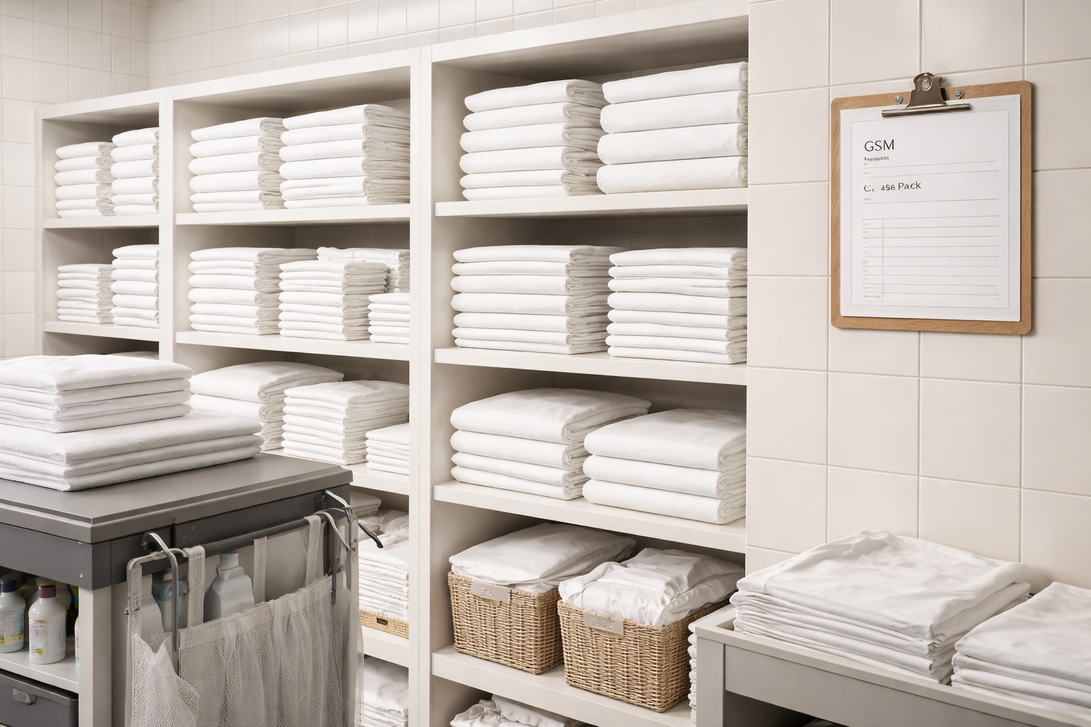
Hotel Towel Buying Guide: GSM, Cotton, and Case Packs
Quick Answer
For most hotels, choose towels by (1) intended use (bath, hand, washcloth, pool/spa), (2) GSM/weight for guest feel vs. dry time, (3) cotton type/content based on laundering realities, and (4) case-pack and par planning so you always have clean inventory without overbuying. If you operate on-site laundry, washer efficiency and water use affect total towel cost over time, not just purchase price.
Start with the job: match towel type to where it will be used
Hotel programs typically mix multiple towel categories so you can align performance and cost with each area of the property. Hotels4Humanity groups towels by common hospitality use cases, including Hotel Towels and dedicated categories like Bath and Spa Towels (as well as hand towels, washcloths, gym towels, and pool/beach towels). Using purpose-built categories helps standardize feel and housekeeping routines across rooms and outlets.
Common hotel towel categories to plan for
- Bath towels: primary guest touchpoint; balance softness, absorption, and dry time.
- Hand towels: frequent use; typically replaced/washed more often.
- Washcloths: highest soil load; plan higher replacement rate.
- Bath mats: durability and laundering throughput often matter more than plushness.
- Pool & beach towels: higher loss risk; choose accordingly for budget and controls.
- Spa towels: prioritize comfort and consistent white level if your brand standards require it.
GSM explained: what it affects (and what it doesn’t)
GSM (grams per square meter) is a towel weight measure used to compare heft. In practice, GSM influences hand feel, perceived plushness, and often how long towels take to dry. It does not automatically guarantee better performance—construction, yarn, and cotton type also matter—so treat GSM as one input, not the only one.
Practical GSM guidance (editorial)
- Lower GSM: typically lighter and may dry faster; can be a fit for high-turn operations or where laundry throughput is tight.
- Mid-range GSM: common hotel all-around choice; balances guest feel with operational practicality.
- Higher GSM: often feels plusher; may require more drying time and attention to laundry capacity.
GSM selection checklist
- What’s your laundry constraint: wash capacity, drying capacity, or both?
- Do you need a consistent “fluffy” presentation on the cart, or fast room turns?
- Are towels used in areas with frequent change-outs (pool, spa, gym)?
Cotton content: focus on durability and laundry realities
Hotels often standardize on cotton-rich towels because guests expect absorbency and comfort. The best choice for your property depends on your laundry process, stain load, and how aggressively towels are washed and dried.
Questions to ask before choosing cotton type/content
- Soil/stain profile: makeup, self-tanner, spa oils, pool chemicals, or heavy cleaning chemicals can change how quickly towels show wear.
- Processing approach: in-house laundry vs. outsourced; each has different control over wash formulas and dry times.
- Guest expectation: economy, midscale, upscale, spa-focused, extended stay, etc.
Laundry impact: why washer efficiency affects towel cost over time
Towels are a “buy once, wash many times” item, so the cost to process them matters. ENERGY STAR notes that ENERGY STAR certified commercial clothes washers are on average 9% more efficient and use about 45% less water than standard models. That kind of reduction can influence the total cost of ownership for towel programs—especially in properties with on-site laundry, high occupancy, or heavy pool/spa usage.
Source: ENERGY STAR – Commercial Clothes Washers
Operational takeaway
- If you’re evaluating heavier towels (often longer dry times), confirm your laundry equipment and staffing can support the added throughput needs.
- If you’re upgrading laundry equipment, factor water and energy performance into towel decisions—not just initial textile cost.
Case packs and ordering: avoid shortages without tying up cash
Most hospitality textiles are purchased in case packs (a fixed number of units per case). Case-pack discipline makes receiving, storage, and inventory counting easier, but it also means you should plan purchases in multiples that match your property’s par levels.
Hotel towel par levels (editorial rule of thumb)
- 2 par: minimum coverage (one in room, one in laundry), but can be tight during peak occupancy or slow laundry days.
- 3 par: common operating target (in room, in laundry, in reserve).
- 4+ par: useful for resorts, pool-heavy properties, or when laundry turnaround is slower.
Simple ordering worksheet (fill in your numbers)
- Rooms × towels per room = base set
- Base set × par level = operating inventory
- Operating inventory ÷ units per case pack = cases to stock (round up)
Comparison table: how to choose based on priorities
| Priority | What to optimize for | What to watch | Typical approach (editorial) |
|---|---|---|---|
| Fast turns / high laundry throughput | Dry time, consistent sizing, easy folding | Guest perception of “lightweight” towels | Choose a practical GSM and standardize across rooms |
| Premium guest feel | Hand feel, presentation on carts, absorption | Higher drying time; more storage space | Use plusher bath towels, keep support towels practical |
| Pool/spa focus | Loss control, durability, fast replenishment | Higher replacement rate; uneven return patterns | Separate pool/spa inventory from guestroom inventory |
| Cost stability | Predictable reorders, case-pack alignment | Stockouts during peak periods | Set par levels and reorder points tied to case packs |
How towel purchasing fits with your broader linen program
Towels don’t operate in isolation: storage, cart setups, and laundry flow connect to the rest of your textile decisions. If you’re reviewing towels, it can be a good time to confirm you’re also standardized on core linen items like sheets and other room textiles. Hotels4Humanity organizes these products across hospitality categories including Hotel Bedding alongside towel collections.
Replacement planning: build a predictable rhythm
Even with good laundering, towels retire due to staining, fraying, and overall appearance. Rather than waiting for shortages, set a replacement rhythm tied to inspections and monthly usage.
Practical replacement controls (editorial)
- Define “keep” standards: whiteness threshold, edge fray limits, minimum size.
- Separate “downgrade” streams: move older towels from guestrooms to housekeeping/maintenance where appropriate.
- Track losses by outlet: pool and spa programs often benefit from separate counts and tighter checkout processes.
Next steps: align product selection to your operation
- Confirm which towel categories you need and standardize within each: Hotel Towels and Bath and Spa Towels.
- Choose GSM and cotton content based on your laundry constraints and guest experience goals.
- Set par levels and order in case-pack-friendly quantities to minimize stockouts and storage strain.
- If you run on-site laundry, factor in equipment efficiency and water use when comparing towel programs. ENERGY STAR reports certified commercial washers are on average 9% more efficient and use about 45% less water than standard models.

About the author
hotels4humanity
Practical purchasing guidance for hospitality teams choosing dependable supplies for better guest stays.
Was this guide helpful?
Your feedback helps us improve future operator guides.
Related posts
Disposable vs. Reusable Hotel Slippers: A Bulk Purchasing Guide
Sep 28th 2026
Hotel Bed Frame Buying Guide: Fit, Support, and Installation Checklist
Sep 15th 2026
What Mattresses Do Hotels Use? A Commercial Buying Guide
Sep 7th 2026

Essential Hotel Amenities for Business Travelers: An Operator's Checklist
Aug 31st 2026