Hotel Housekeeping
Housekeeping Cart Setup: What Hotels Should Keep on Every Cart
What you'll learn
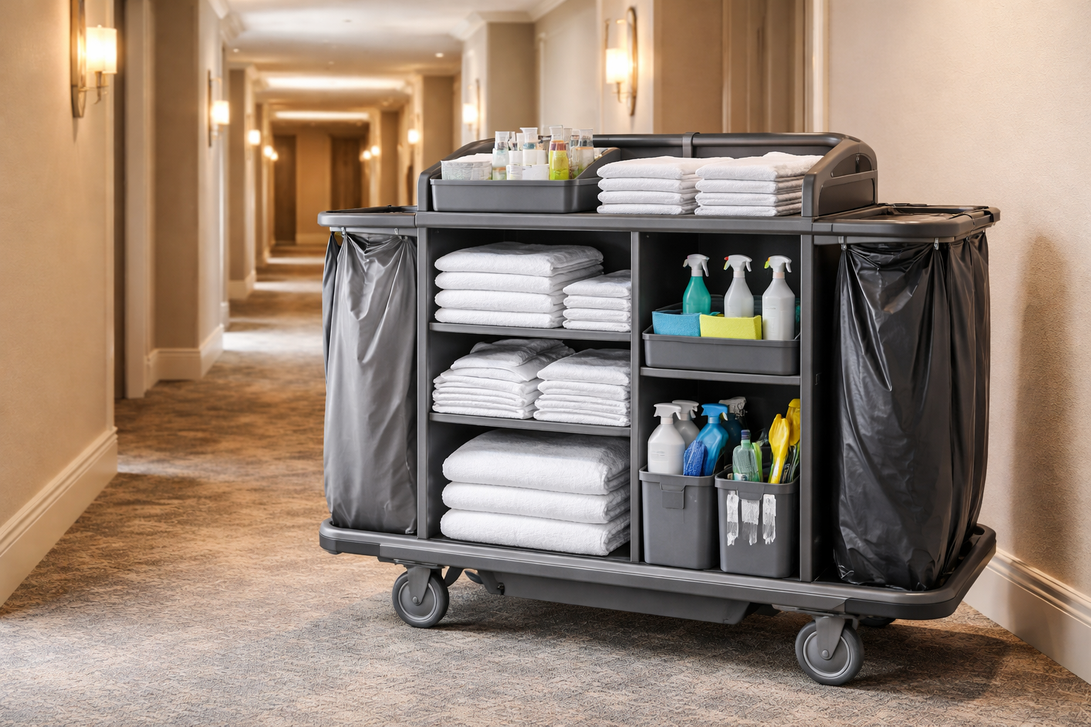
A consistent housekeeping cart setup helps room attendants move through their assigned section with fewer avoidable trips while keeping clean supplies, chemicals, and used materials organized. The right inventory is not a one-size-fits-all quantity list; it is a property-approved baseline that can be adjusted for room mix, amenity program, stayover versus departure workload, and laundry turnaround.
Quick Answer
Every hotel housekeeping cart should have defined areas for clean linen, guest-room replenishment supplies, approved cleaning tools and products, required PPE, and separate waste and soiled-linen collection. Add a simple restocking checklist and a process for reporting maintenance issues. Keep chemical use label-directed, avoid mixing products, and load the cart to reduce unnecessary lifting, reaching, and pushing force.
Start With a Four-Zone Cart Layout
The most practical cart setup gives every supply category a consistent home. Exact placement will depend on the cart model and your operating procedures, but attendants should be able to distinguish clean and used areas at a glance.
| Cart zone | Suggested contents | Operating purpose |
|---|---|---|
| Clean zone | Fresh bed linen, towels, washcloths, sealed room supplies | Keeps room-reset inventory separate from used materials. |
| Quick-access zone | Daily checklist, room-status tools, small amenity caddy, frequently used cloths | Reduces time spent searching for small, high-use items. |
| Chemical and tool zone | Property-approved products, labeled spray bottles, PPE, brushes, cloths, and tool holders | Supports a repeatable, label-directed cleaning workflow. |
| Soiled zone | Dedicated bags or compartments for trash and used linen | Maintains a clear boundary between clean stock and materials removed from rooms. |
Separate clean-linen and soiled-material areas are a sound operational practice. Commercial housekeeping-cart systems commonly provide distinct linen and waste collection options, but each hotel should establish the arrangement that fits its cart configuration and procedures.
What to Keep on Every Housekeeping Cart
1. Clean linen and towel replenishment
Stock a controlled par of the linens and towels needed for the room types assigned to the cart. This may include:
- Bed sheets, pillowcases, and other approved bedding components
- Bath towels, hand towels, washcloths, and bath mats
- Replacement pillow protectors or other property-approved room-reset items
Par levels should be set by the property, not copied from a universal checklist. Consider the number of rooms on the route, expected departure volume, room configurations, linen turnaround, and how often the cart can be replenished. For coordinated purchasing across towels, bedding, and room essentials, review Hotel Room Supplies.
2. Guest amenities and bathroom supplies
Use a small caddy or divided organizer for countable guest-room replenishment items. Keeping small supplies contained makes it easier to spot shortages before the next room.
- Property-approved soap and amenity replacements
- Toilet tissue and facial tissue
- Cups, coffee-service replacements, or other approved in-room consumables
- Shower-curtain, bath-accessory, or other replacement items assigned to housekeeping
Keep amenity stock away from chemical containers and used linen. Hotels updating their bath program can find related options in Hotel Bathroom Supplies.
3. Surface-cleaning tools and consumables
Carry the property-approved tools required for the assigned room types and surfaces. A baseline may include clean cloths, a duster, detail brushes, a toilet brush or dedicated restroom-cleaning tool, and other task-specific items.
The CDC distinguishes cleaning from sanitizing and disinfecting: cleaning removes dirt, impurities, and many germs; sanitizing reduces germs to levels considered safe under applicable requirements; disinfecting kills remaining germs after cleaning. In most situations, cleaning is the starting point, and staff should use products appropriate for the surface and task. See the CDC's facility cleaning and disinfecting guidance for additional context.
4. Approved disinfectant, when required by the task
A cart may carry a property-approved disinfectant, but it should not become a substitute for a cleaning process or a reason to treat every surface the same way. Use disinfectants only as directed by the product label and your hotel's procedures.
- Use only approved, properly labeled products.
- Follow approved use sites, dilution instructions, application directions, PPE requirements, and ventilation guidance.
- When a label specifies contact time, keep the surface visibly wet for that full period.
- Do not mix cleaning products or chemicals unless product directions specifically allow it.
The EPA explains that a disinfectant label establishes where and how a product may be used, including its contact time requirements. Review the EPA's guidance on EPA-registered disinfectants and label directions when reviewing your chemical program.
5. PPE and hand-hygiene supplies
Include the PPE required by each product's label and Safety Data Sheet (SDS), rather than assuming one item is appropriate for every product. Depending on the approved chemical system and tasks, this may include gloves and, where specified, eye protection or other protective equipment.
Hotel leadership should ensure staff can access applicable SDSs and receive training on the chemicals they handle. OSHA identifies disinfectants, detergents, and concentrated soaps as potential workplace hazards and emphasizes labeling, training, and safety information for hazardous chemicals.
6. Trash and soiled-linen collection supplies
Every cart needs a dedicated way to collect trash and used linens without placing them near fresh room stock. Include:
- Waste bags compatible with the cart's collection compartment
- A separate bag or compartment for used linen
- Extra liners or replacement bags for the assigned section
Do not overload collection bags to the point that staff must lift or pull excessive weight. If a route produces more used linen or trash than the cart can safely hold, build a planned collection stop into the workflow rather than allowing the cart to become overfilled.
7. Reporting and minor-maintenance tools
Give attendants a reliable way to flag conditions that require follow-up. This can be a paper room checklist, a property-approved mobile workflow, or another established reporting method. The cart may also carry small, approved replacement items that housekeeping is authorized to use, but maintenance work should stay within the team's training and responsibility.
Common items to report include leaks, damaged fixtures, burned-out lamps, malfunctioning HVAC controls, loose hardware, stains requiring specialty treatment, and guest-room supply damage.
Cleaning and Disinfecting: Build the Workflow Around the Task
A practical cart setup supports a sequence that staff can repeat consistently:
- Remove trash and used linens into the designated soiled zone.
- Clean visibly dirty and high-touch surfaces using the appropriate tools and products.
- Use a disinfectant when the hotel's procedure and the condition of the room call for it.
- Follow the product label for dilution, application, PPE, ventilation, and contact time.
- Reset the room with clean linen, towels, and approved amenities.
This approach avoids the common operational mistake of treating cleaning and disinfecting as interchangeable steps. It also helps supervisors train to a clear process without prescribing a single chemical or product for every hotel.
Load the Cart for Staff Safety
Cart organization affects more than speed. OSHA identifies pushing and pulling heavy carts as a housekeeping ergonomic concern and recommends measures such as low-resistance wheels, lower lifting demands, and work organization that reduces forceful exertion and awkward posture.
- Keep wheels clean, maintained, and rolling freely.
- Avoid overloading the cart with more linen, liquids, or waste than the route requires.
- Place heavier, stable items where they can be accessed without repeated high reaching or deep bending.
- Use holders, clips, or compartments for long tools so they do not block pathways.
- Keep chemical containers upright, secured, and clearly labeled.
For chemical-handling practices, consult OSHA's hazardous chemicals housekeeping guidance and adapt procedures to your hotel's chemical inventory, labels, SDSs, and applicable requirements.
Create a Property-Specific Cart Par Sheet
The most useful housekeeping cart checklist is one your team can replenish consistently. Build a par sheet around your actual operation, including:
- Number of rooms assigned per attendant and per cart
- Expected stayover and departure mix
- Room types, bed configurations, and occupancy patterns
- Required towels, linen pieces, and guest amenities per room
- Laundry collection and delivery schedule
- Approved cleaning and disinfecting products
- Cart capacity, storage compartments, and waste-bag capacity
- Restocking location and who verifies the cart at shift start and end
Review the par sheet with room attendants and supervisors after implementation. If staff routinely run short of one item, return with excessive stock, or struggle with cart weight, adjust the layout or replenishment frequency rather than adding more of everything.
A Simple End-of-Shift Cart Reset
Standardize the reset so the next shift starts with a usable cart:
- Remove trash and soiled linen.
- Return unused clean linen and amenities according to property procedure.
- Clean the cart and inspect it for spills, damaged bags, loose holders, and wheel issues.
- Restock approved items to the established par level.
- Check chemical labels, container condition, and required PPE.
- Document maintenance concerns or supply shortages for follow-up.
Build a More Consistent Housekeeping Supply Program
A well-stocked cart is not simply a collection of products. It is a repeatable operating system: clean stock stays clean, attendants can access the right tools quickly, chemicals are handled according to their labels and SDSs, and used materials have a designated place.
For carts, accessories, cleaning supplies, gloves, trash bags, and related operational products, explore Housekeeping and Janitorial Supplies from Hotels4Humanity.
Sources

About the author
hotels4humanity
Practical purchasing guidance for hospitality teams choosing dependable supplies for better guest stays.
Was this guide helpful?
Your feedback helps us improve future operator guides.
Related posts
Hotel Bed Frame Buying Guide: Fit, Support, and Installation Checklist
Sep 15th 2026
What Mattresses Do Hotels Use? A Commercial Buying Guide
Sep 7th 2026

Essential Hotel Amenities for Business Travelers: An Operator's Checklist
Aug 31st 2026
Hotel Amenity Packaging: How to Cut Plastic Waste Without Disrupting Housekeeping
Aug 25th 2026