Hotel Amenities
Hotel Amenity Packaging: How to Cut Plastic Waste Without Disrupting Housekeeping
What you'll learn
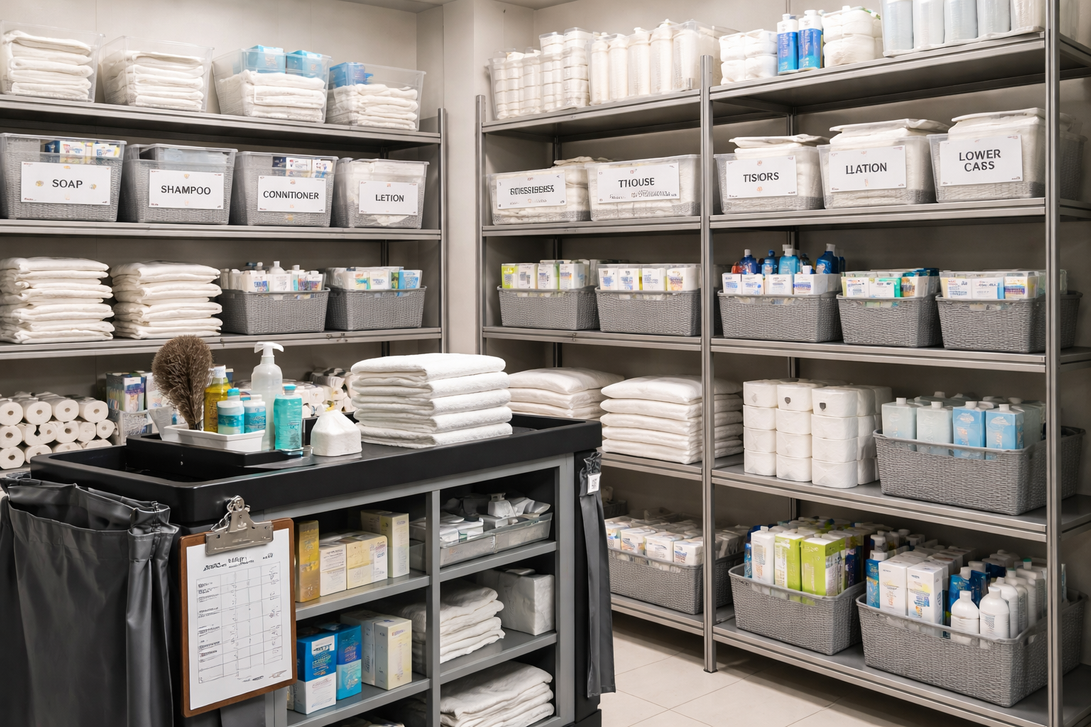
Quick Answer
The most reliable way to cut plastic waste from hotel amenities is to prevent unnecessary items and packaging from entering the room in the first place, then select a format that housekeeping can operate consistently. Start with an amenity audit, move low-demand items to an on-request model where appropriate, pilot any dispenser or refill system before a full rollout, and measure packaging purchased and issued per occupied room. Recycling can help with remaining material, but the U.S. Environmental Protection Agency places source reduction and reuse ahead of downstream waste-management options.
For a practical starting point, review the formats, inventory needs, and workflow considerations across your Hotel Soap and Amenities program before changing suppliers or installing new hardware.
Start With Waste You Can Prevent
Amenity packaging decisions are often framed as a choice between plastic and another material. That is too narrow. The first question is whether the item, package, or default room placement is needed for most stays.
The EPA's materials-management hierarchy prioritizes reducing material use and reuse before recycling and disposal. In hotel operations, that points to a simple sequence: remove unnecessary default items, reduce packaging per guest use, consider durable refill or dispenser systems where they fit, and manage the remaining packaging through available recovery channels.
Disposable toiletries are a credible category to examine. In a UNEP and World Travel & Tourism Council report based on self-reported procurement and/or waste-composition data from 69 hotels, toiletries represented 31% of single-use plastic products by weight in that sample. The report notes that the dataset may not represent every hotel, so use it to identify a likely hotspot—not as a property-specific benchmark.
Audit Every Amenity Format Before Changing Suppliers
Build a baseline from purchasing records, storeroom counts, housekeeping issue sheets, and, when feasible, a short waste review. Include both guest-facing packaging and the secondary packaging that arrives at the loading dock.
What to put on the audit list
- Shampoo, conditioner, body wash, lotion, and hand soap bottles or tubes
- Wrapped soap bars
- Dental, shaving, vanity, and sewing kits
- Shower caps, sanitary bags, slippers, and other low-demand room items
- Water bottles and coffee-related guest products where those programs are managed with amenities
- Cases, shrink wrap, liners, cartons, and other shipping materials
Record the information that supports a purchasing decision
- Item description and current format
- Units purchased, issued, and remaining in inventory
- Packaging weight, if supplier specifications or a sample weighing process are available
- Demand by room type, guest segment, and length of stay
- Supplier lead time, case pack, minimum order quantity, and storage footprint
- Brand, franchise, local-rule, health, insurer, and accessibility requirements that may apply
- Guest replacement requests and housekeeping exceptions
Hotels4Humanity's amenity buying guidance emphasizes format selection, dispenser compatibility, consumption, storage capacity, supplier lead times, and fit with housekeeping workflow. These factors should be assessed together; a package that looks efficient on paper may create stockouts, cluttered carts, or avoidable room-attendant steps.
Choose the Right Action for Each Item
Do not apply one solution to every product. Rank each amenity by guest demand, packaging intensity, service importance, and operational burden. The table below is a practical decision tool, not a universal rule.
| Item condition | Potential action | Operational check before rollout |
|---|---|---|
| Low demand and routinely left unused | Remove from default placement and make available on request | Confirm a clear request channel, response time, and accessible alternatives |
| Several products serve a similar routine | Reduce duplication or consider a combined format where guest expectations allow | Check product performance, brand standards, and guest feedback |
| High-volume liquid product with reliable maintenance support | Pilot a durable dispenser or refill system | Test mounting, tamper resistance, refilling, cleaning, leakage, and maintenance ownership |
| Single-use format remains necessary | Reduce packaging per use or improve case-pack and delivery efficiency | Verify product protection, hygiene needs, shelf life, and local recovery options |
| Alternative single-use material is proposed | Evaluate the complete system before switching | Review sourcing, transport, product loss, disposal pathway, and actual local infrastructure |
A refillable or alternative-material format may reduce plastic waste at the property, but it is not automatically the lower-impact option overall. UNEP and WTTC caution that replacing single-use plastics with other single-use materials can shift impacts rather than solve them. The appropriate choice depends on product volume, vessel durability, refill logistics, sanitation procedures, transport, guest use, and local collection or processing conditions.
Run a Housekeeping-First Pilot
Housekeeping continuity is the test of whether a lower-waste amenity system will last. A dispenser program that leaks, requires complicated refills, or adds frequent maintenance calls can undermine the intended result. Rather than converting every room at once, pilot one floor, building, or room type.
Test these conditions during the pilot
- Room setup: Is the vessel mounted securely, easy to inspect, and positioned for guest use and cleaning?
- Product control: Can attendants see product levels quickly and identify leaks or damage?
- Cart flow: What refill containers, replacement parts, tools, and cleaning supplies need a place on the cart?
- Back-of-house flow: Is there safe, clean storage for bulk product and spare components?
- Turn time: Does the new process add or remove steps during a normal room clean?
- Maintenance: Who owns repairs, replacements, and work-order follow-up?
- Service recovery: Can staff quickly provide a requested item or preferred format?
- Training: Are refill, cleaning, inspection, and escalation instructions clear for every shift?
Set practical thresholds before expansion. For example, determine in advance what level of leakage, stockouts, guest complaints, additional room-turn time, or dispenser work orders would require a process change before more rooms are converted.
Protect Guest Access While Reducing Default Packaging
Reducing default room items should not mean leaving guests without essentials. Keep a defined on-request assortment at the front desk or through a rapid delivery process. This is especially important for guests who arrive without toiletries, prefer a particular format, have mobility needs, or need an accessible product option.
A concise message can explain the change without making the guest feel that service has been reduced:
We have reduced unnecessary single-use amenity packaging to help cut waste. Essentials are provided in-room, and additional personal-care items are available on request.
Train front desk, housekeeping, and guest-services teams on the request process. Track requests by item and by occupied room; a rising request rate may show that an item should remain in-room for a particular room type or guest segment.
Measure Results Per Occupied Room
Use a consistent baseline and comparison period, such as 30 days before and 30 days after a pilot. Normalize results to occupied rooms so occupancy changes do not obscure the outcome.
| Measure | Simple calculation | What it can reveal |
|---|---|---|
| Plastic packaging purchased per occupied room | Packaging weight purchased ÷ occupied rooms | Whether purchasing is moving toward source reduction |
| Mini bottles issued per occupied room | Units issued ÷ occupied rooms | Whether default single-use placement is declining |
| Product volume used per occupied room | Volume issued or refilled ÷ occupied rooms | Potential over-dispensing, leakage, or changes in use |
| Packaging avoided | Baseline packaging weight − current packaging weight | Absolute reduction over the same comparison period |
| Guest amenity requests | Requests by item ÷ occupied rooms | Service gaps created by an on-request change |
| Housekeeping impact | Before/after pilot turn time and callback rate | Whether the process fits daily operations |
| Dispenser maintenance rate | Dispenser work orders ÷ rooms with dispensers | Hidden repair and replacement burden |
Keep the tracking method simple enough for daily use. The UNEP/WTTC report describes a hotel case study that began with a plastic-item inventory, used targeted actions and staff training, involved suppliers, and continued monitoring items and plastic avoided or eliminated. Your property does not need a complex reporting system to apply the same discipline.
A 90-Day Amenity Packaging Plan
Days 1–30: Establish the baseline
- Inventory amenity formats, units purchased, units issued, and secondary packaging.
- Identify low-demand default items and high-volume packaging categories.
- Confirm applicable brand standards, supplier instructions, and local requirements.
- Review storage, cart capacity, lead times, and current par levels.
Days 31–60: Pilot one change
- Select one room type, floor, or building for a controlled test.
- Test an on-request change, a reduced-packaging format, or a dispenser system—not every change at once.
- Document training steps, refill procedures, maintenance ownership, and escalation contacts.
- Track product use, packaging, guest requests, leakage, work orders, and room-turn effects.
Days 61–90: Refine and expand carefully
- Compare pilot results with the baseline using occupied-room-normalized measures.
- Correct cart, storage, replenishment, or guest-communication issues.
- Update housekeeping and maintenance standard operating procedures.
- Expand only when the system meets your service and operational thresholds.
Coordinate Purchasing With Inventory Control
A packaging reduction plan works best when procurement and housekeeping use the same consumption data. Avoid replacing one waste problem with excess bulk inventory, expired product, or cartons that do not fit available storage. Review order quantities against actual issue rates and supplier lead times, and set pars by property, room type, and season where needed.
For related purchasing controls, see How to Stock Hotel Bathroom Amenities Without Overstocking. You can also review the broader assortment of Hotel Bathroom Supplies when coordinating dispensers, accessories, storage, and room setup.
Sources

About the author
hotels4humanity
Practical purchasing guidance for hospitality teams choosing dependable supplies for better guest stays.
Was this guide helpful?
Your feedback helps us improve future operator guides.
Related posts
Disposable vs. Reusable Hotel Slippers: A Bulk Purchasing Guide
Sep 28th 2026
Hotel Bed Frame Buying Guide: Fit, Support, and Installation Checklist
Sep 15th 2026

What Mattresses Do Hotels Use? A Commercial Buying Guide
Sep 7th 2026

Essential Hotel Amenities for Business Travelers: An Operator's Checklist
Aug 31st 2026