Hotel Housekeeping
Hotel Housekeeping Supplies List: Everything You Need
What you'll learn
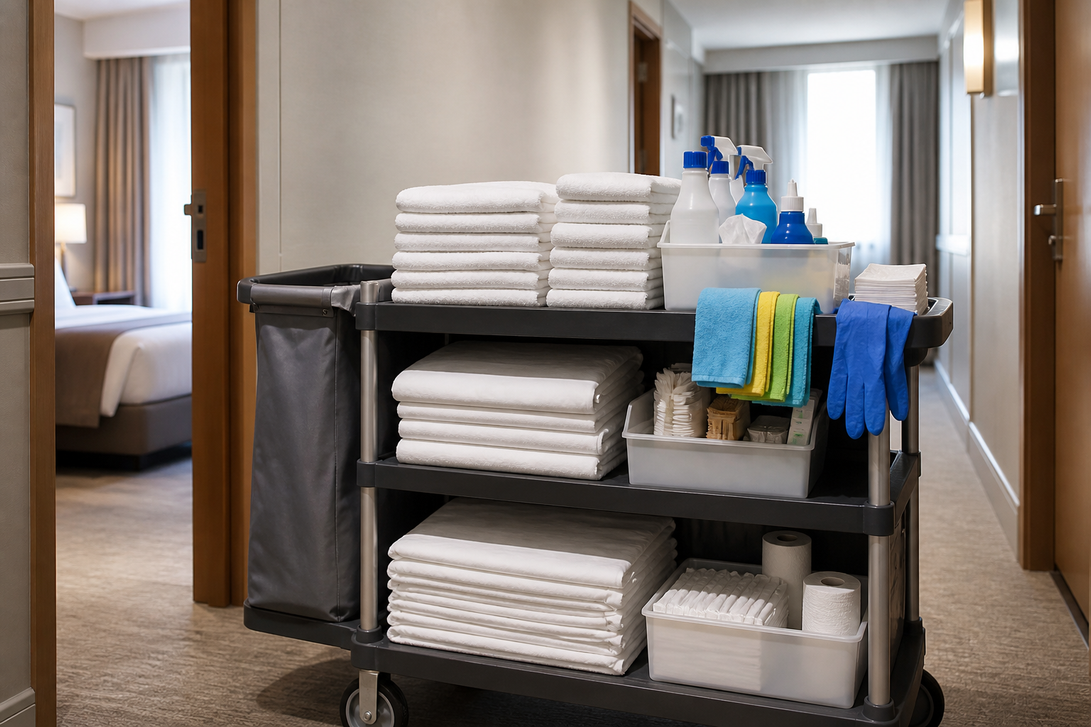
A good hotel housekeeping supply list should help the team turn rooms quickly, protect guests, and avoid last-minute purchasing. The best list is not just a pile of cleaning products. It connects guest-room supplies, bathroom items, linens, carts, chemicals, PPE, storage, and reorder points into one practical operating system.
Use this guide as a working checklist for hotels, motels, inns, extended-stay properties, resorts, and short-term rental operators that need consistent room readiness without overstocking the supply room.
Quick Answer
Hotels should keep housekeeping carts, cleaning supplies, disinfectants, microfiber cloths, gloves, trash liners, laundry bags, guest-room replacement items, bathroom supplies, bed linens, towels, vacuums, mops, brooms, amenity refills, and back-of-house storage supplies in regular stock. The right mix depends on room count, property type, cleaning frequency, laundry setup, and how often items are replaced or consumed.
Build the List Around Room Turnover
The simplest way to organize housekeeping purchasing is to start with the room attendant's workflow. Every room turn usually includes removing trash and used linens, cleaning surfaces, refreshing bathroom supplies, making the bed, replacing guest items, vacuuming or mopping, reporting maintenance issues, and restocking the cart for the next room.
That workflow points to seven core supply groups:
- Cart and storage supplies
- Cleaning chemicals and disinfectants
- Cloths, brushes, mops, brooms, and floor tools
- PPE and chemical-safety supplies
- Guest-room replacement items
- Bathroom supplies and amenities
- Linens, towels, protectors, and laundry supplies
Hotels4Humanity groups many of these items in housekeeping and janitorial supplies, including cleaning supplies, housekeeping carts, laundry carts, and vacuums. The same buying plan should connect to hotel room supplies, hotel bathroom supplies, hotel bedding, and hotel towels.
Essential Housekeeping Supplies Checklist
1. Housekeeping Carts and Cart Supplies
The cart is the mobile supply room. A cart should carry enough stock for the assigned section without becoming too heavy, too wide, or hard to steer through hallways.
- Housekeeping carts
- Replacement cart bags
- Caddy bags and cart organizers
- Trash collection bags
- Laundry collection bags
- Spare cart wheels or parts where available
- Labels or shelf markers for consistent cart setup
Buy carts by hallway width, elevator fit, room count per attendant, replacement-part availability, and how the property separates clean linen, trash, amenities, and chemicals.
2. Cleaning Chemicals and Disinfectants
Housekeeping teams need separate products for general cleaning, bathrooms, glass, floors, odor control, and disinfecting. The CDC distinguishes cleaning, sanitizing, and disinfecting, and notes that cleaning removes most types of harmful germs from surfaces while disinfecting can kill harmful germs that remain after cleaning.
- All-purpose cleaner
- Bathroom cleaner
- Glass and mirror cleaner
- Floor cleaner
- Disinfectant for approved surfaces
- Descaler or mineral-deposit remover where needed
- Odor-control products
- Spray bottles, dilution bottles, and labels
- Safety Data Sheet access for chemical products
For disinfectants, check the product label, approved surface, contact time, dilution directions, and storage instructions. The EPA explains that registered disinfectants must be used according to the product label, and the CDC warns not to mix cleaning products or chemicals because doing so can be hazardous.
3. Cloths, Brushes, Mops, and Floor Tools
Reusable tools affect cleaning quality and labor time. Stock enough tools so attendants are not forced to reuse dirty cloths or improvise with the wrong product for the surface.
- Microfiber cleaning cloths by color or task
- Glass cloths
- Scrub pads and brushes
- Toilet brushes
- Mops and mop heads
- Brooms and dustpans
- Buckets and wringers
- Floor caution signs
- Vacuum cleaners and replacement bags or filters
Color-coding cloths by task can reduce cross-use between bathrooms, counters, glass, and general surfaces. The exact color system matters less than training staff to follow it consistently.
4. PPE and Worker-Safety Supplies
PPE should match the chemicals and tasks staff handle. OSHA notes that employers should provide and ensure employee use of PPE such as goggles, gloves, and splash aprons when appropriate for hazardous chemical exposure.
- Disposable gloves
- Reusable cleaning gloves
- Eye protection where splash risk exists
- Splash aprons where needed
- Masks or respirators only where the product and policy require them
- Hand soap and hand-sanitizing supplies
- Clearly labeled chemical containers
- Training materials and Safety Data Sheet access
PPE should not be treated as a one-time purchase. Build it into par levels so the team does not run short during peak occupancy, deep-cleaning projects, or high-turnover weekends.
5. Guest-Room Replacement Items
Guest-room supplies are the items attendants replace, straighten, or report during daily room service and checkout cleaning. These should be easy to find, easy to count, and consistent by room type.
- Trash can liners
- Tissue and toilet paper
- Cups or wrapped drinkware supplies
- Coffee, tea, condiment, and stirrer supplies where offered
- Hangers
- Laundry bags
- Notepads, pens, and printed room materials if used
- Ironing-board covers or replacement parts
- Hair dryer bags and small room-accessory replacements
For broader replenishment planning, connect this list to the property's hotel room supplies program so purchasing can keep guest-room accessories, luggage racks, ironing supplies, coffee makers, clocks, charging stations, and related items consistent across rooms.
6. Bathroom Supplies and Amenities
Bathrooms are one of the clearest signals of room readiness. The right supply list should cover both consumables and durable items that wear out or break over time.
- Soap and amenity refills
- Shampoo, conditioner, lotion, or dispenser products
- Toilet paper and facial tissue
- Shower curtains and liners
- Shower hooks or hookless curtain replacements
- Bath mats
- Bathroom hardware replacements
- Hair dryers and hair dryer bags
- Towels, washcloths, hand towels, and bath towels
Hotels4Humanity's hotel bathroom supplies category includes shower curtains, hotel soap and amenities, robes and slippers, hair dryers, hotel towels, and bathroom accessories. Keep those items tied to housekeeping inventory so attendants are not depending on emergency purchases.
7. Bed Linens, Towels, and Protectors
Housekeeping cannot run smoothly without enough linen par. At minimum, the linen program should cover sheets, pillowcases, towels, washcloths, bath mats, mattress pads, pillow protectors, blankets, duvet covers, and comfort items used by the property.
- Flat sheets, fitted sheets, and pillowcases
- Mattress pads and mattress protectors
- Pillow protectors
- Blankets, duvet inserts, duvet covers, or coverlets
- Bath towels, hand towels, washcloths, and bath mats
- Pool, gym, or spa towels if applicable
- Laundry bags and laundry carts
- Stain-removal supplies approved for the textile program
Keep linen inventory separate by room type, bed size, department, and condition. A towel used at the pool does not need the same specification as a guest-room bath towel, and a stained but usable back-of-house rag should not drift back into guest-room linen.
Par Levels: How Much Housekeeping Inventory to Keep
Par levels prevent the two common mistakes: understocking the items housekeeping burns through daily and overbuying slow-moving products that crowd storage.
| Supply Type | Recommended Planning Method | What to Watch |
|---|---|---|
| Guest-room consumables | Usage per occupied room plus safety stock | Occupancy swings, group business, long-stay rooms |
| Cleaning chemicals | Usage per room turn and public-area schedule | Dilution control, label directions, shelf life |
| Linens and towels | Room count, bed mix, laundry cycle, and replacement rate | Shortages, stains, rag-out rate, mismatched sizes |
| PPE | Task-based issue rate plus peak-period reserve | Glove size mix, splash-risk tasks, training compliance |
| Carts and tools | Number of attendants, sections, floors, and shift pattern | Damaged wheels, missing bags, poor storage layout |
A practical starting point is to count how many rooms each attendant turns per shift, how often each item is used per room, and how many delivery days it takes to replenish the item. That gives purchasing a reorder point instead of a guess.
What New Hotel Owners Should Buy First
New hotel owners should buy the items required to clean, reset, and inspect rooms before adding optional upgrades. Start with carts, chemicals, PPE, trash liners, room consumables, bed linens, towels, bathroom supplies, and vacuums. Then add convenience items such as extra luggage racks, specialty amenities, backup hair dryers, and deep-cleaning tools.
If the budget is tight, spend first on the items that stop room turnover when they are missing: towels, sheets, pillowcases, toilet paper, trash liners, all-purpose cleaner, bathroom cleaner, disinfectant, gloves, carts, vacuums, and laundry bags.
Common Housekeeping Supply Mistakes
- Buying chemicals without checking surface compatibility and contact time
- Keeping too few gloves or only one glove size
- Using one cloth type for every cleaning task
- Understocking towels during high-occupancy periods
- Mixing guest-room linen with pool, spa, or cleaning-rag inventory
- Ignoring replacement parts for carts, vacuums, and dispensers
- Buying bulky case packs without checking storage space
- Letting each floor set up carts differently
Housekeeping Buying Checklist
Before placing a bulk order, confirm room count, average occupancy, room types, cleaning frequency, laundry cycle time, storage capacity, cart count, chemical program, PPE requirements, current shortages, replacement rate, and supplier lead time.
Then organize the order by department use. Guest-room items should be grouped separately from bathroom supplies, linen, floor care, chemicals, PPE, and cart parts. This makes receiving easier and helps managers see whether the order supports daily room turnover or simply fills storage shelves.
Frequently Asked Questions
What are the most important housekeeping supplies for hotels?
The most important supplies are housekeeping carts, cleaning chemicals, disinfectants, microfiber cloths, gloves, trash liners, vacuums, mops, guest-room consumables, bathroom supplies, bed linens, towels, and laundry bags.
How should hotels choose cleaning chemicals?
Hotels should choose chemicals by surface, task, label directions, dilution process, staff training, PPE needs, and storage requirements. Disinfectants should be used only for approved surfaces and according to the product label.
How much linen should housekeeping keep on hand?
Linen par depends on room count, laundry turnaround, occupancy, bed mix, and replacement rate. A property needs enough clean linen for rooms in service, linen in laundry, backup stock, and items temporarily removed for stains or repairs.
What should be stocked on a housekeeping cart?
A cart should carry clean linens, towels, bathroom supplies, guest-room consumables, trash liners, laundry bags, cleaning cloths, approved chemicals, PPE, and small replacement items needed for that attendant's assigned rooms.
Where can hotels buy housekeeping supplies in bulk?
Hotels can buy bulk housekeeping supplies through hospitality supply distributors that carry commercial-grade cleaning supplies, carts, vacuums, room supplies, bathroom items, towels, and linens. Hotels4Humanity carries these categories across housekeeping, room supply, bathroom, bedding, and towel buying paths.

About the author
hotels4humanity
Practical purchasing guidance for hospitality teams choosing dependable supplies for better guest stays.
Was this guide helpful?
Your feedback helps us improve future operator guides.
Related posts

Hotel Crib Buying and Inspection Checklist for Operators
Oct 19th 2026
Disposable vs. Reusable Hotel Slippers: A Bulk Purchasing Guide
Sep 28th 2026
Hotel Bed Frame Buying Guide: Fit, Support, and Installation Checklist
Sep 15th 2026

What Mattresses Do Hotels Use? A Commercial Buying Guide
Sep 7th 2026