hospitality trends 2026
Hospitality Trends Every Hotel Owner Should Know (2026)
What you'll learn
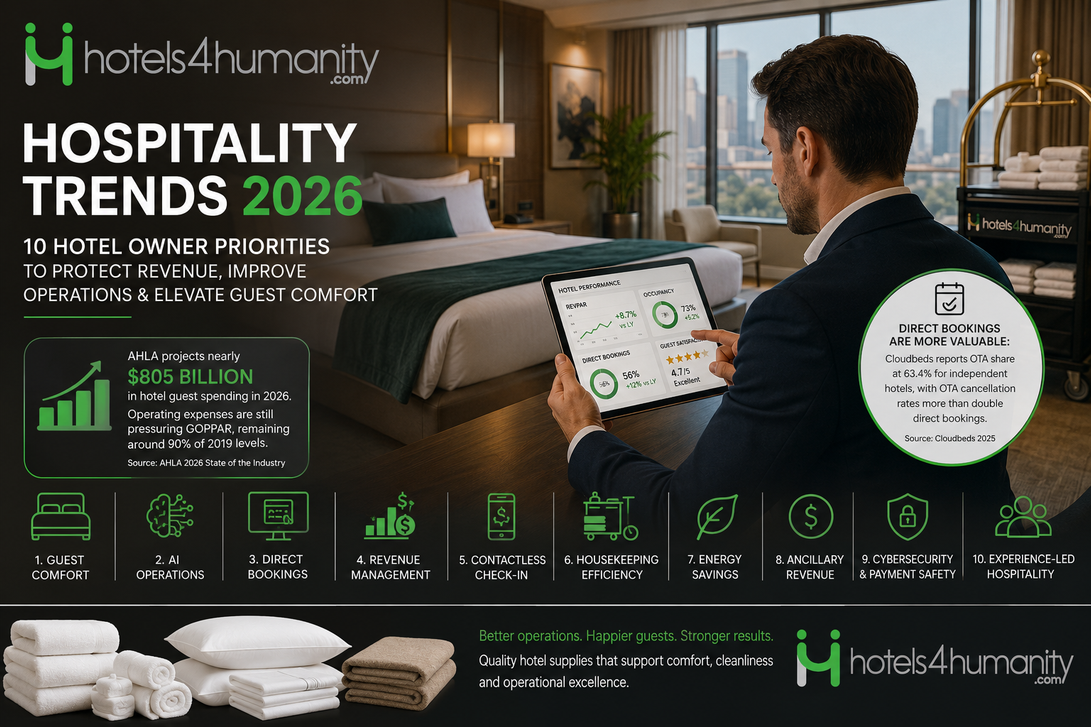
Hotel owners are entering 2026 with a simple but difficult challenge: guests expect better service, cleaner rooms, faster communication, and more comfortable stays, while operating costs continue to pressure margins. The most important hospitality trends 2026 are not just about chasing new technology. They are about using smarter operations to protect profit, improve guest comfort, and make hotel teams more efficient.
For independent hotels, boutique properties, motels, resorts, and small hotel groups, the winning strategy is practical. Focus on the areas that directly affect guest satisfaction and profitability: better rooms, faster service, smarter pricing, lower energy waste, cleaner operations, cybersecurity, and stronger direct relationships with guests.
Quick Answer: What Are the Top Hospitality Trends in 2026?
The top hospitality trends in 2026 are guest comfort, AI operations, direct bookings, revenue management, contactless check-in, housekeeping efficiency, energy savings, ancillary revenue, cybersecurity, and experience-led hospitality.
These trends matter because hotel owners are dealing with higher costs, tighter staffing, changing guest expectations, and more pressure to protect every dollar of revenue. AHLA projects hotel guest spending will reach nearly $805 billion in 2026, but also reports that rising operating expenses have kept gross operating profit per available room, or GOPPAR, at roughly 90% of 2019 levels. Source: AHLA 2026 State of the Industry.
1. Guest Comfort Is Becoming a Revenue Strategy
Guest comfort is no longer just a housekeeping issue. In 2026, it is a revenue issue. Guests judge a hotel by how the room feels once they arrive: the mattress, sheets, pillows, blankets, towels, lighting, temperature, cleanliness, and the overall sense that the property is well cared for.
A tired room can quietly damage reviews, repeat bookings, and average daily rate. A comfortable, clean, well-stocked room can do the opposite. This is especially important for independent hotels competing against large brands with bigger marketing budgets.
Hotel owners should treat core guestroom supplies as part of their 2026 revenue strategy. That includes maintaining consistent hotel bedding supplies, replacing worn hotel sheets and linens, keeping enough hotel towels on hand, and upgrading flat or inconsistent hotel pillows.
- Upgrade worn towels before they become a review problem.
- Replace flat pillows with a clearer pillow program.
- Standardize sheets, mattress pads, blankets, and duvet covers across room types.
- Keep backup bedding and terry inventory available for high-occupancy periods.
- Use room inspections to identify comfort problems before guests do.
The trend is simple: hotels that take comfort seriously will have an easier time protecting rates, improving reviews, and building guest loyalty.
2. AI Is Moving From Experiment to Everyday Hotel Operations
Artificial intelligence is no longer just a buzzword in hospitality. In 2026, AI is becoming a practical support tool for front desk teams, reservation teams, revenue managers, and hotel owners.
The most useful AI tools are not replacing hospitality. They are helping staff handle repetitive work faster. Examples include answering common guest questions, sending pre-arrival messages, helping with upsells, summarizing guest feedback, and routing service requests to the right team member.
A smart first step is to identify the 20 to 50 questions your front desk answers most often:
- What time is check-in?
- Do you allow pets?
- Is breakfast included?
- Can I request extra towels?
- Do you have early check-in?
- Where do I park?
Once those questions are documented, AI chat, SMS automation, or website messaging tools can help answer them consistently. The key is to keep human handoff available. Guests still want people when the issue is emotional, urgent, or complicated.
Owner takeaway: Use AI to reduce repetitive work, not to remove hospitality. The goal is faster responses, fewer missed inquiries, and more time for staff to solve real guest problems.
3. Direct Bookings Are Becoming More Important Again
Direct bookings are one of the most important hotel owner trends in 2026 because they protect margin, strengthen the guest relationship, and give the hotel better first-party data.
Cloudbeds reports that OTA share reached 63.4% for independent hotels in 2025. It also reports that 21.8% of OTA bookings were canceled, compared with 10.6% of direct bookings. That means OTA cancellations were more than double the direct-booking cancellation rate. Source: Cloudbeds direct booking guide.
A direct booking strategy does not have to be complicated. Many hotels can improve direct bookings by fixing the basics:
- Make sure the hotel website loads quickly on mobile.
- Use clear photos of rooms, beds, bathrooms, amenities, and public spaces.
- Make the booking button obvious on every important page.
- Show room differences clearly so guests understand what they are buying.
- Offer direct-booking benefits such as flexible check-in, parking perks, upgrades, or welcome amenities.
- Follow up with past guests through email or SMS campaigns.
Direct booking also connects to physical hospitality. If a guest books directly and requests extra pillows, hypoallergenic bedding, extra towels, or a rollaway bed, the hotel has a chance to personalize the stay before arrival.
Owner takeaway: Direct bookings are not just about avoiding commission. They help hotels know their guests better and create more personalized stays.
4. Revenue Management Is Becoming More Accessible for Smaller Hotels
Revenue management used to feel like something only large brands and big-city hotels could afford. That is changing. In 2026, smaller hotels have more access to tools that help adjust pricing based on demand, market conditions, events, seasonality, and booking pace.
For hotel owners still relying mostly on spreadsheets or gut instinct, the risk is underpricing high-demand nights and overpricing low-demand nights. Both mistakes hurt revenue.
Hotels should review:
- Local event calendars
- Compression nights
- Weekend versus weekday demand
- Competitor pricing
- Cancellation patterns
- Length-of-stay rules
- Room type performance
Revenue management is not only about charging more. It is about charging the right rate at the right time for the right guest. That matters even more when hotel costs are rising.
Owner takeaway: In 2026, better pricing discipline may be one of the fastest ways to improve profitability without adding more rooms or more staff.
5. Contactless Check-In Is Becoming a Staffing Tool
Contactless check-in started as a convenience, but in 2026 it is increasingly a staffing solution. Guests want faster arrival, and hotels want fewer front desk bottlenecks.
Contactless arrival can include:
- Pre-arrival registration forms
- Digital ID collection
- Digital payment authorization
- Mobile check-in
- Self-service kiosks
- Mobile keys
- Automated arrival instructions
Not every hotel needs a full kiosk or mobile key system. Many properties can start smaller by sending pre-arrival forms, collecting estimated arrival times, and allowing guests to request extras before they arrive.
This also helps housekeeping and operations. If a guest says they are arriving early, the hotel can prioritize that room. If a family requests a rollaway bed, extra towels, additional pillows, or more hotel blankets, the property can prepare before the guest is standing at the desk.
Owner takeaway: Contactless check-in is not about removing service. It is about removing friction so staff can focus on guests who need personal help.
6. Housekeeping Efficiency Is a Major Competitive Advantage
Housekeeping remains one of the most important departments in hospitality. In 2026, hotels are looking for ways to help housekeeping teams work faster, communicate better, and reduce room-readiness problems.
AHLA’s March 2026 survey found that hotel owners and operators named cost of goods and supplies 71%, labor costs 65%, utility and energy costs 50%, and workforce shortages 42% among their most frequently cited pressures. Source: AHLA cost and staffing survey.
Those pressures make housekeeping efficiency one of the most practical hotel operations trends to watch. If a hotel does not have enough clean towels, sheets, blankets, mattress pads, or pillow protectors, the entire operation slows down. Staff become frustrated, guests wait longer, and quality suffers.
A practical 2026 housekeeping checklist includes:
- Maintain proper par levels for sheets, towels, blankets, and mattress protection.
- Remove stained or worn terry before it reaches the guestroom.
- Standardize products so replacements are easier to manage.
- Track which items disappear, wear out, or create the most guest complaints.
- Use housekeeping feedback before making purchasing decisions.
Owner takeaway: A hotel cannot deliver a strong guest experience if housekeeping is under-supplied. The right inventory supports both cleanliness and speed.
7. Energy Savings Are Moving From Sustainability Goal to Profit Strategy
Energy costs remain a major pressure for hotel owners. In 2026, energy management is no longer just about looking environmentally responsible. It is about protecting the bottom line.
Hotels are investing in:
- Smart thermostats
- Occupancy-based HVAC controls
- LED lighting
- Better insulation and window treatments
- Water-saving fixtures
- Laundry efficiency improvements
- Preventive maintenance for HVAC equipment
Guestroom HVAC is one of the biggest opportunities. Empty rooms do not need to be cooled or heated the same way occupied rooms do. Smart controls can reduce waste while still keeping guests comfortable.
Supplies also matter. Durable hotel towels, quality hotel bedding, mattress protectors, and well-chosen laundry products can help reduce replacement cycles, protect mattresses, and improve operational efficiency.
Owner takeaway: Energy savings and supply durability should be viewed together. Both reduce waste, lower long-term costs, and support a more efficient hotel.
8. Ancillary Revenue Is Becoming a Bigger Part of Hotel Profit
Hotels are becoming more creative about revenue beyond the room rate. In 2026, ancillary revenue is becoming a normal part of hotel strategy, especially for independent properties.
Examples include:
- Early check-in
- Late checkout
- Room upgrades
- Pet fees and pet packages
- Parking packages
- Breakfast add-ons
- Local experience packages
- Romance or celebration packages
- Rollaway bed or extra bedding requests
The best ancillary offers are simple, useful, and easy for staff to fulfill. A hotel should not create packages that add operational chaos. Start with offers that guests already ask for.
For example, if families frequently ask for rollaway beds, extra pillows, extra blankets, or additional towels, those requests can become part of a better pre-arrival process. This improves service and may create additional revenue where appropriate.
Owner takeaway: Ancillary revenue works best when it solves a real guest need and is easy for the hotel team to deliver.
9. Cybersecurity and Payment Safety Are Now Hotel Operations Issues
Hotels handle sensitive guest information every day: names, addresses, payment details, travel dates, IDs, loyalty information, and sometimes corporate or group booking data. In 2026, cybersecurity is not just an IT topic. It is an operations topic.
HospitalityNet reported that VikingCloud research found 82% of North American hotels suffered cyberattacks last summer, with AI-powered phishing, IoT exploits, and vendor vulnerabilities emerging as major 2026 threats. Source: HospitalityNet cybersecurity outlook.
Hotel owners should review basic security practices:
- Use multi-factor authentication for important systems.
- Limit employee access based on role.
- Stop using paper credit card authorization forms when possible.
- Train staff to recognize phishing emails.
- Use secure payment links and tokenized payment tools.
- Review vendor access to hotel systems.
- Remove former employees from systems immediately.
A single security failure can create chargebacks, guest distrust, operational disruption, and legal exposure. Even smaller hotels need basic digital hygiene.
Owner takeaway: Payment safety and cybersecurity should be treated like locks, cameras, and fire alarms. They are part of protecting the property.
10. Experience-Led Hotels Will Stand Out
One of the biggest advantages independent hotels have is personality. Large brands often win on loyalty programs and scale, but independent hotels can win on experience, local flavor, and authenticity.
In 2026, guests are looking for more than a room. They want a stay that feels memorable. That could mean:
- A better sleep experience
- A beautiful lobby or breakfast area
- Local food and beverage partnerships
- Wellness amenities
- Pet-friendly touches
- Family-friendly room setups
- Instagram-worthy design details
- Locally inspired decor
- Comfortable workspaces for business travelers
Experience does not always require a major renovation. Sometimes it starts with better bedding, softer towels, cleaner presentation, thoughtful amenities, and staff who are equipped to say yes to reasonable guest requests.
Owner takeaway: The guest experience is built from hundreds of details. Supplies, service, design, cleanliness, and technology all work together.
2026 Hotel Owner Action Plan
If you own or operate a hotel, the best 2026 strategy is to prioritize improvements that have a clear connection to revenue, reviews, labor efficiency, or cost control.
Start with these questions:
- What guest complaints show up most often in reviews?
- Which room supplies are wearing out too quickly?
- Are we losing money through weak direct bookings?
- Are we underpricing high-demand nights?
- Are front desk employees answering the same questions over and over?
- Does housekeeping have enough inventory to turn rooms efficiently?
- Are energy costs rising faster than revenue?
- Are payment and guest data handled securely?
Then focus on five practical moves:
- Improve the room first. Upgrade bedding, towels, pillows, mattress protection, and comfort items before chasing cosmetic trends.
- Automate repetitive communication. Use AI or messaging tools to answer common questions and collect guest requests before arrival.
- Strengthen direct bookings. Improve your website, booking engine, photography, and guest follow-up campaigns.
- Use smarter pricing. Review rates around events, weekends, holidays, and compression periods.
- Reduce operational waste. Look at energy controls, laundry efficiency, par levels, and supply durability.
Where Hotels4Humanity Fits In
Technology will continue to shape hospitality in 2026, but the physical guest experience still matters. A hotel can have modern check-in, AI messaging, and smart pricing, but guests will still judge the stay by the room they sleep in, the towels they use, and the comfort they feel.
Hotels4Humanity helps hotel owners and operators source the essential supplies that support a better guest experience, including hotel bedding, hotel sheets and linen, hotel towels, hotel pillows, hotel blankets, hotel luggage carts, rollaway beds, and other hospitality products.
The right supplies help hotels:
- Improve guest comfort
- Reduce complaints
- Support housekeeping efficiency
- Standardize rooms across the property
- Prepare for peak occupancy
- Protect mattresses and room assets
- Create a cleaner, more professional guest impression
In 2026, hotel success will come from combining smart operations with strong fundamentals. That means better technology, better pricing, better communication, and better rooms.
Need to refresh your hotel bedding, towels, pillows, rollaway beds, luggage carts, or guestroom essentials? Hotels4Humanity can help you source practical hospitality supplies for your property.
Final Takeaway
The latest hospitality trends for 2026 all point in the same direction: hotel owners need to operate smarter while delivering a more comfortable and reliable guest experience.
AI, direct booking, revenue management, contactless check-in, energy savings, housekeeping efficiency, cybersecurity, and experience-led hospitality are all important. But none of them replace the basics. Clean rooms, comfortable beds, soft towels, reliable supplies, and responsive service still define the guest experience.
The hotels that win in 2026 will be the ones that connect both sides of the business: modern tools behind the scenes and better comfort in the room.
Sources and Further Reading
- AHLA: 2026 State of the Industry
- AHLA: Rising Cost and Staffing Challenges Persist for Hotels
- Cloudbeds: 2026 State of Independent Hotels Report
- Cloudbeds: Direct Bookings for Hotels
- CoStar / STR: Hotel Data Insights
- Deloitte: Future of Hospitality and AI Innovation
- HospitalityNet: Hotel Cybersecurity Threats to Watch in 2026

About the author
Hotels For Humanity
Practical purchasing guidance for hospitality teams choosing dependable supplies for better guest stays.
Was this guide helpful?
Your feedback helps us improve future operator guides.
Related posts
Disposable vs. Reusable Hotel Slippers: A Bulk Purchasing Guide
Sep 28th 2026
Hotel Bed Frame Buying Guide: Fit, Support, and Installation Checklist
Sep 15th 2026
What Mattresses Do Hotels Use? A Commercial Buying Guide
Sep 7th 2026
Essential Hotel Amenities for Business Travelers: An Operator's Checklist
Aug 31st 2026